
THE SCIENCE OF SLEEP
HAVE YOU EVER WONDERED…
Why Do We Dream?
Every night, your brain closes the curtains on the outside world and puts on a show of its own full of familiar faces, impossibly physics, and plot-lines that make zero sense. No inputs from the outside world, and yet somehow your mind builds an entire experience out of nothing. Vivid colors, sounds, panic, joy, maybe fear, and for some reason your third grade teacher that you haven't seen in years. Humans have been trying to explain this phenomenon for thousands of years, once believing dreams were messages from the gods, and later as windows into the future. Freud and Jung were the first to really try to study dreaming scientifically and gave the nighttime mystery its first “modern” theories. Now, over a hundred years later, the research continues. Neuroscientists are still picking apart what's happening up in your head while you sleep. There’s still no single agreed-upon answer for why we dream. But the pieces we do have are fascinating enough to make you think twice before hitting snooze.
-
Long before we acquired the technology to begin studying brain waves, dreams were treated as something sacred. Early civilizations saw them as a kind of hotline between the human world and the divine, and the Greeks and Romans were convinced that dreams could predict the future. In some cultures, like the Esa Eja community in the Peruvian Amazon, dreaming is still treated as a sacred practice. It is viewed as a way to gain knowledge or work through a problem through the dream itself. For most of history, dreams belonged to priests, philosophers, and fortune-tellers, not scientists.
Towards the end of the 19th century, things started to change when Sigmund Freud and Carl Jung introduced the first theories of dreaming that reflected modern psychology. Freud believed dreams were where our repressed, unresolved wishes finally got to play out. Jung, who studied under Freud, agreed that dreams carried real psychological weight, though he took the idea in a new direction. For decades, “decoding” dreams and trying to find the hidden message behind the imagery was the only way people really thought about dreaming.
Then science got involved, and the explanation of dreaming became a lot less poetic and a lot more electrical. Your brain runs on about 80 billion neurons, all firing together to create what scientists call brain waves. Which type of brain waves that show up usually depends on how awake you are. Beta and gamma waves dominate when you are awake and alert. As you begin to fall asleep, things up there slow down into alpha waves, and eventually theta waves take over. This happens right around the same time that your prefrontal cortex (basically your brain's impulse control center) starts quieting down. With less “censorship” from that part of the brain, dreams are free to get as weird as they want.
Dreaming is also closely tied to memory. While you’re sleeping, the brain works on filing away everything you learned that day. And dreams might be a side of effect of this neurological process. Memories, people, and places that are getting buzzed around the brain become remixed and occasionally thrown into odd scenarios that make no logical sense. Researchers have even used brain-imaging technology to match patterns of sleeping brain activity to patterns recorded while people looked at real objects while awake. And surprisingly enough, they were able to correctly guess what someone had been dreaming about roughly 60% of the time. Not perfect, but far progress from the assumption that dreams were completely random.
So, somewhere between ancient prophecy and modern neuroscience, we’ve landed on a much stranger truth. Dreaming isn't something of magic or prophecy, but it isn't entirely explained through science either. It's not until we get into REM sleep, the science of memory, and the biggest theories about what dreams are actually for, that things really start to click. So keep exploring to learn more.
Scroll to Explore

WHAT WE EXPERIENCE
Turns out, we're all dreaming about a lot of the same things. Falling, flying, missing an exam you didn’t study for. These common themes show up again and again in surveys and polls of real people describing their own dreams. This section is less about hard science, and more to show self-reported patterns of dreaming, and popular interpretations of what they might mean. This is the “shared human experience” of it all. Click any card to explore the psychology behind each one.
Being Chased
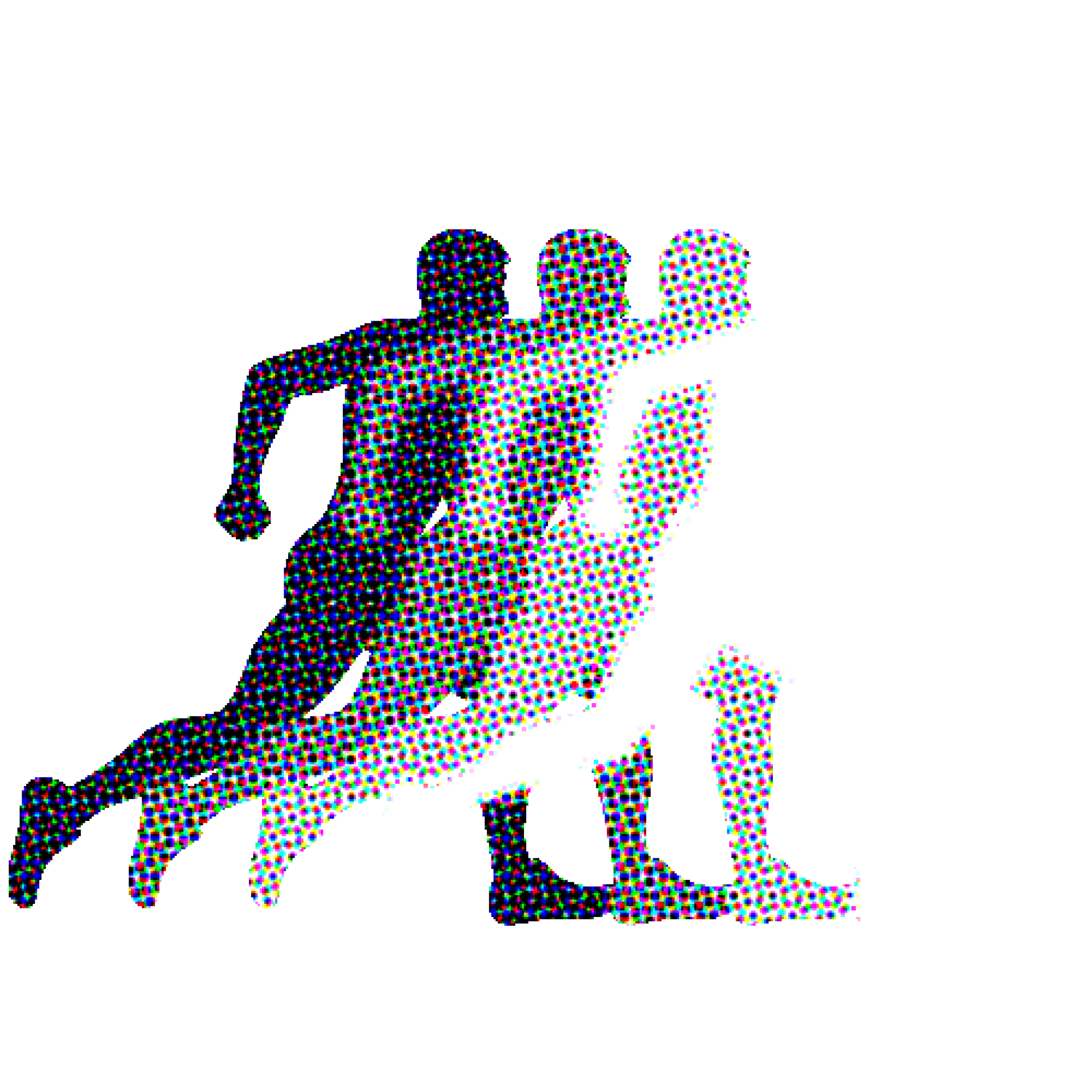
Running from something
-
Something is after you and your legs won't move fast enough. Sound familiar? Chase dreams are some of the most universally reported, and they tend to show up when you're avoiding a problem instead of facing it head-on. The thing chasing you doesn't have to be literal; it's often a stand-in for stress, unresolved tension, or a decision you keep putting off. Jungian psychology takes it a step further, framing your pursuer as a "shadow self,” a part of you demanding to be confronted rather than outrun.
Naked in Public
Feeling exposed
-
You're going about your day, and suddenly you realize you have no clothes on. And everyone can see it. This dream is almost always about vulnerability: feeling exposed, judged, or "seen" in a way you didn't choose. It tends to show up around big transitions like a new job, a move, meeting new people: when you feel emotionally unguarded. Interestingly, if you feel calm rather than panicked in the dream, it can flip the meaning entirely, symbolizing self-acceptance instead of fear.
Can’t Move
Frozen in place
-
You need to run, scream, or just get up, and your body won't listen. This dream is one of the most frequently reported across all surveys, and it usually reflects a feeling of powerlessness in waking life: a situation you feel stuck in, a decision you can't make, or a sense that no matter what you do, you can't get any traction. It's also sometimes linked to sleep paralysis, a real (if temporary) inability to move that happens as you're drifting in or out of REM sleep, when your body is still "locked" even though your mind has woken up.
Flying
Breaking Free

-
Soaring above it all is one of the more empowering dreams you can have, and it's usually read that way, too. Flying dreams are most often linked to feelings of success, freedom, or breaking away from something that's been holding you back. But the details matter: soaring smoothly tends to reflect confidence and control, while struggling to get off the ground, or failing to take off entirely, often points to feeling stuck, blocked, or weighed down by responsibility.
Running Late
Racing the clock
-
You're rushing, but no matter what you do, you're not going to make it to the flight, the exam, the interview. Running-late dreams are usually less about the specific event and more about a broader feeling: that time is slipping away, or that you're falling behind in some part of your life. It's an especially common dream during busy, high-pressure seasons, or times of big transition. Some psychologists read it as your mind's way of reminding you it's not too late to pursue what you actually want.
Losing Someone
Letting go

-
Whether it's your own death or the death of someone close to you, dreams about loss hit differently than most, and they're more common than people expect. Dreaming of your own death is most often interpreted as a fear of illness or mortality, or as a sign that you're ready for a fresh start. Dreaming about losing someone else tends to point somewhere more emotional: anxiety about letting go, or a sense that something (a relationship, a chapter of life) is ending. It's rarely as literal as it feels in the moment.
Our Most Common Dreams
Falling
Losing your footing
-
One second you're fine, the next you’re plummeting off a cliff, through the floor, into nothingness. It’s one of the most commonly reported dreams out there, and it usually shows up when something in your life feels unstable. Psychologically, it’s tied to fear of failure, loss of control, or insecurity about something you haven’t fully worked through. Interestingly enough, Freud originally read falling dreams as giving into temptation. Modern interpretations lean more toward plain old anxiety and vulnerability. Not all falling dreams are bad news though. Falling calmly, or without fear, is often read as a sign that you're comfortable letting go and embracing change.
Teeth Falling Out
Losing your grip

-
Somehow both bizarre and incredibly common, teeth-falling-out dreams tend to rank right up there with the most-reported dreams people have. They're often tied to anxiety about appearance, aging, or self-expression. Teeth are central to how we talk and how we're perceived, so losing them in a dream can symbolize a fear of saying the wrong thing, feeling unattractive, or losing a sense of control and power.
Taking a Test
Feeling unprepared

-
You show up on time, but you're completely unprepared. The panic sets in fast. Test dreams are some of the most common dreams reported by adults, even decades after actually taking an exam. That's because the dream usually isn't about school at all; it's about feeling evaluated, unqualified, or like you're about to be "found out" in some part of your real life: work, parenting, a big goal you're chasing. It's a classic imposter-syndrome dream in disguise.

01
SCIENTIFIC & PSYCHOLOGICAL
No one has fully cracked why we dream. But for over a century, researchers have been studying, building, and challenging some of the major theories to make sense of it. Here are the five major theories that explain the purpose of dreaming.
The Theories
02
03
04
05
06
Wish Fulfillment Theory
Sigmund Freud — 1900
Freud believed dreams were where your unfulfilled desires finally got a chance to play out. Even the strange or upsetting ones, he argued, were secretly working through something you couldn't fully express while awake.
-
Freud was the first to argue that dreams weren't random, that they actually served a scientific purpose [4]. He believed dreams were largely a form of wish-fulfillment: a space where a person could act out desires they weren't able to satisfy in waking life. Not every dream fit that mold neatly, though. Dreams involving punishment, guilt, or trauma seemed to work differently, which led Freud to expand his thinking. He proposed that dreams could also help a person process guilt or work through traumatic experiences [4]. Taken together, these ideas formed the foundation of Freud's broader theory: that dreams are a window into the unconscious mind, expressing thoughts and desires the waking mind keeps hidden or repressed [4][1]. Freud's framework treated the "signal direction" of dreaming as top-down (psychological motives shaping the sensory scenes of a dream) with the underlying function being to protect and preserve sleep against those unconscious urges[5].
Direct Mental Expression
Carl Jung — Early 20th Century
Jung broke from Freud with a simple but radical idea: dreams don't disguise the truth, they speak it directly; just in a symbolic language the waking mind has to learn to read.
-
Freud was the first to argue that dreams weren't random, that they actually served a scientific purpose [4]. He believed dreams were largely a form of wish-fulfillment: a space where a person could act out desires they weren't able to satisfy in waking life. Not every dream fit that mold neatly, though. Dreams involving punishment, guilt, or trauma seemed to work differently, which led Freud to expand his thinking. He proposed that dreams could also help a person process guilt or work through traumatic experiences [4]. Taken together, these ideas formed the foundation of Freud's broader theory: that dreams are a window into the unconscious mind, expressing thoughts and desires the waking mind keeps hidden or repressed [4][1]. Freud's framework treated the "signal direction" of dreaming as top-down (psychological motives shaping the sensory scenes of a dream) with the underlying function being to protect and preserve sleep against those unconscious urges[5].
Activation-Synthesis Theory
Allan Hobson & Robert McCarley — 1970s
This theory strips the mysticism away entirely: dreams, it argues, are just your brain trying to make sense of random electrical noise firing during sleep. The "story" is a byproduct,
not a message.
-
This theory emerged directly out of the discovery of REM sleep [4][6]. Hobson and McCarley, working at Harvard, found that during REM sleep the brain produces bursts of electrical activity, signals that show up in EEG recordings [4]. Their theory proposed that dreams are essentially the brain's attempt to make sense of this internal, largely random activity: the story of a dream isn't a hidden message, but a kind of narrative stitched together after the fact to explain the noise [4][6]. In this model, dreaming is best understood as bottom-up: brainstem signals firing more or less at random, with the higher regions of the brain interpreting and packaging them into something resembling a story [5]. At the time, this was a genuinely revolutionary idea, since it reframed dreaming as a biological byproduct rather than something symbolic or meaningful [4]. That said, later research and improved brain-imaging technology have pushed back on parts of this theory, revising how strictly "random" dream content really is [4][5].
Threat Simulation Theory
Antti Revonsuo — Ongoing since early 2000s
What if nightmares are actually training sessions? This theory suggests your brain uses frightening dreams to rehearse danger, so you can react faster if a real threat ever shows up.
-
Finnish psychologist Antti Revonsuo proposed one of the more recent major theories of dreaming, grounded in evolutionary biology [4]. He found that during REM sleep, the amygdala (the brain's fight-or-flight center) activates in patterns similar to how it responds to a real survival threat [4][6]. Revonsuo's theory holds that the main purpose of negative or frightening dreams is to give the brain a kind of rehearsal space, so that recognizing and avoiding danger becomes faster and more automatic when a similar situation shows up in real life [4]. In other words, nightmares and anxiety-driven dreams may be an evolutionary tool. Basically, a low-stakes way for the brain to practice staying safe [4][6].
Neurocognitive Model
David Foulkes & G. William Domhoff — Ongoing
Maybe dreaming isn't hiding anything at all. This model treats dreams as your imagination running on autopilot. Using the same machinery behind daydreams, just left alone to build worlds while you sleep.
-
This model takes a different approach than the others, treating dreaming less as a hidden message or a biological glitch, and more as an extension of the same imaginative machinery the brain uses while awake [5]. According to this view, once the mature brain is disconnected from outside input during sleep, it runs simulations using stored memory and general knowledge. Your brain builds imagined scenes the same way it builds daydreams or mental imagery when conscious [5]. Unlike Freud's and Jung's models, which treat dreams as carrying a hidden or symbolic function, the neurocognitive model leaves open the possibility that dreaming doesn't serve a defined purpose at all. Instead it may simply be a natural byproduct of having a brain complex enough to imagine, paired with the state of sleep itself [5]. It's also the model most closely tied to research showing that dreaming relies heavily on the same neural regions used for waking visual imagination, rather than on language or verbal memory [5].
Memory Consolidation
Multiple Researchers — Ongoing
What if dreams are just your brain filing paperwork? This theory holds that dreaming is tied to the process of sorting, storing, and stabilizing memories. During sleep, your brain is turning the day's experiences into long-term recall.
-
Unlike the other theories on this list, memory consolidation isn't tied to one researcher or a single defining study. It's an ongoing area of sleep science built from decades of research on memory and the brain. The core idea: while you sleep, your brain is busy stabilizing newly formed memories, gradually shifting them from short-term impressions into more permanent long-term storage [2]. Dreaming, under this theory, may be a visible side effect of that process. Memories, people, and places getting reactivated, reorganized, and sometimes recombined in ways that produce the odd, jumbled logic of a typical dream [2][7]. Sleep researcher Matthew Walker's work adds another layer to this: a reduction in REM sleep appears to affect a person's ability to understand complex emotions in daily life, which points to REM-stage dreaming playing an active role in emotional and memory processing rather than being purely incidental [1]. Researchers have even matched patterns of brain activity recorded during sleep to patterns recorded while people viewed real objects while awake. This study correctly identifies dream content roughly 60% of the time, which is well above chance and lends further support to the idea that dreaming is tightly interwoven with how the brain handles memory [3].